Key figures
Critical
A failure at a pumping station can cause service interruptions, overflows, high costs and customer complaints.
Remote
When the station is far from headquarters, visibility drops — problems are often discovered only after the impact.
5
Levels, pumps, alarms, energy and communications — telemetry and SCADA for centralized control.
Fewer
Faster response, greater availability and better maintenance management across distributed infrastructure.
Pumping stations are critical infrastructure.
A failure can cause service interruptions, overflows, high maintenance costs and customer complaints.
The problem is that many still lack continuous monitoring.
The Challenge
When a pumping station is far from the operational headquarters, visibility becomes limited.
Often, teams only discover a problem when they receive a call, the level is already critical or equipment has failed.
By then, the impact has already occurred.
What Does Telemetry Enable?
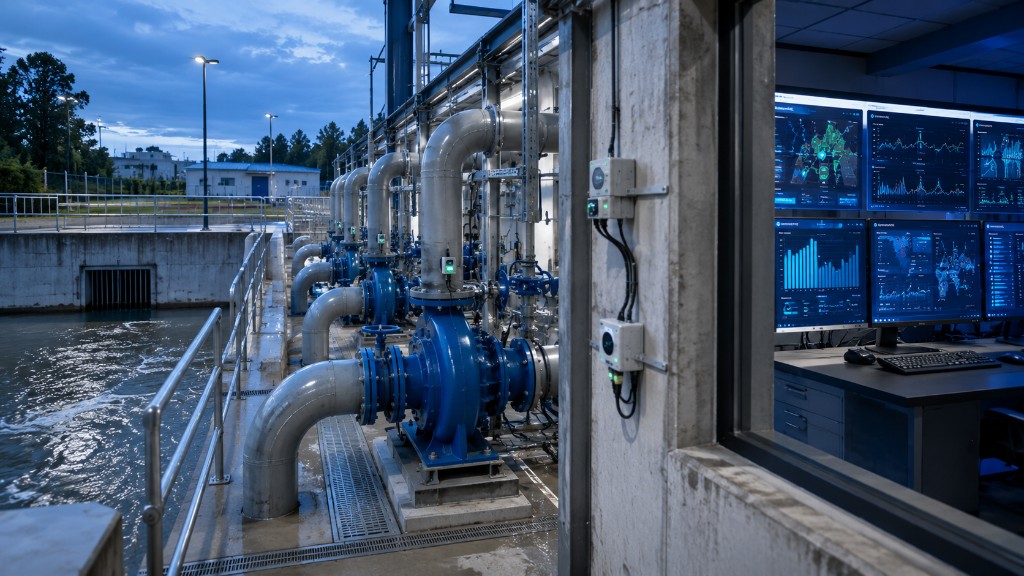
With SCADA, IoT and Telemetry you can monitor pumping stations and water infrastructure in real time — from a single supervision point.
- Levels — reservoirs and wells
- Pumps — status, starts and running hours
- Alarms — electrical failure, intrusion, high and low level
- Energy — consumption and operational efficiency
- Communications — connection status and remote equipment
Benefits
Remote monitoring and telemetry increase operational control and reduce response times across distributed infrastructure.
- Fewer technical trips
- Faster response
- Greater operational availability
- Cost reduction
- Better maintenance management
How ScadaIoT Helps
ScadaIoT implements SCADA, Industrial IoT and Telemetry solutions for WWTPs, WTPs, reservoirs, pumping stations and water distribution networks.
With real-time dashboards and advanced alarm management for more efficient infrastructure management.
Conclusion
For water utilities, municipalities and sanitation companies, remote monitoring of pumping stations is no longer optional — it is a concrete operational advantage.
Those who supervise in real time respond faster, travel less and ensure greater service continuity for communities.