
Key figures
Minutes
In a Data Center, a few minutes of outage can represent thousands of euros in operational losses.
8
UPS, power, generators, chillers, AHUs, temperature, humidity and security — any failure puts operations at risk.
24/7
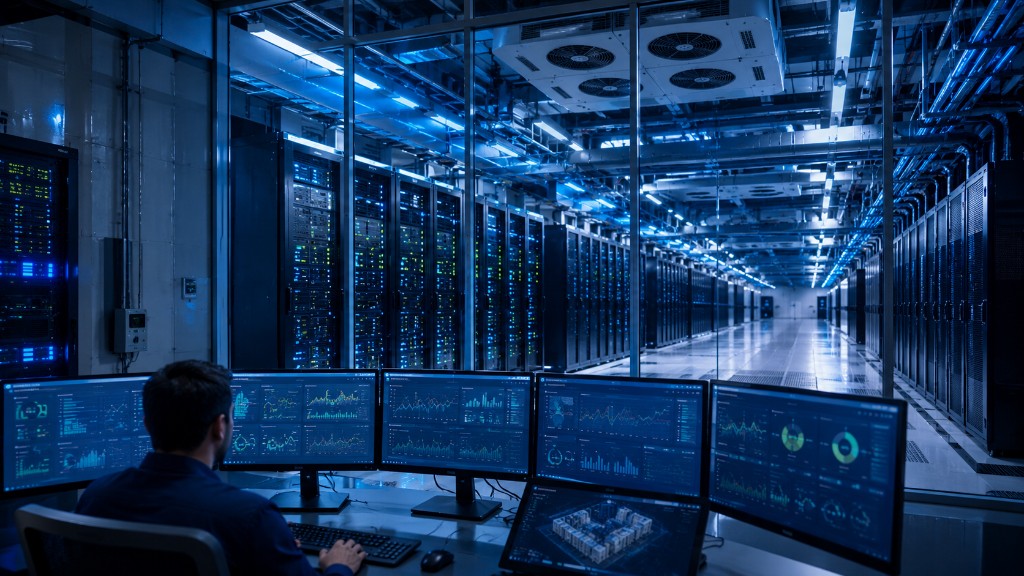
Energy, HVAC, UPS, alarms and environment — full visibility via SCADA, GTC and advanced alarm management.
Total
Early failure detection, lower operational risk and better energy management of the infrastructure.
In a Data Center, a few minutes of downtime can represent thousands of euros in losses.
The question is not whether a failure will occur.
The question is: when it happens, will you discover it immediately?
The Challenge
A Data Center depends on multiple interconnected critical systems.
If one of these systems fails, the entire operation can be at risk.
- UPS
- Electrical power
- Generators
- Chillers
- AHUs
- Temperature
- Humidity
- Security
What Should Be Monitored?
Continuous monitoring of all critical subsystems is essential to ensure availability and respond before impact escalates.
- Energy — power quality, consumption and redundancies
- HVAC — temperatures, chillers and air handling units
- UPS — operational status and autonomy
- Alarms — immediate notifications for critical events
- Environment — temperature, humidity and technical conditions
Benefits
Continuous monitoring and alarm management are essential for critical infrastructure where availability is the priority.
- Continuous availability
- Early failure detection
- Lower operational risk
- Better energy management
- Greater infrastructure control
How ScadaIoT Helps
ScadaIoT implements SCADA, GTC, Energy Management, Remote Monitoring and Advanced Alarm Management solutions to ensure full visibility over critical infrastructure.
For data center managers, facility managers and operations teams who need data-driven decision support — 24 hours a day.
Conclusion
Being ready for the next failure does not mean avoiding all breakdowns — it means detecting them immediately and acting with context.
Those who monitor energy, HVAC, UPS and environment on a single dashboard reduce risk, protect availability and decide with real-time data.