
Key figures
HVAC
Air conditioning systems often represent one of the largest shares of a building's energy consumption.
Months
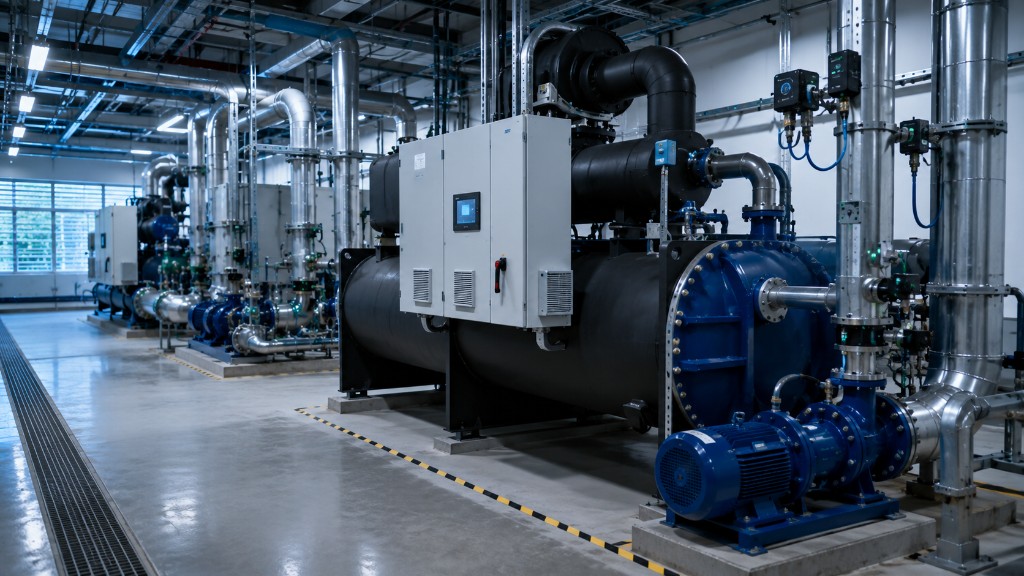
A chiller can run at reduced efficiency for months without anyone noticing.
5
Temperatures, pressures, energy consumption, alarms and running hours — continuous monitoring via GTC and SCADA.
Less
Reduced consumption, lower failure risk, better comfort and longer equipment life.
HVAC systems often represent one of the largest shares of a building's energy consumption.
Yet many organizations don't know the real performance of their chillers, when efficiency starts to drop, when an operational anomaly occurs, or what inefficient operation costs.
The Problem
A chiller can continue running for months with degraded performance without anyone noticing.
- Higher energy consumption
- Lower thermal comfort
- Higher operational costs
- Greater breakdown risk
What Should Be Monitored?
With GTC, SCADA and Industrial IoT you can track chiller performance in real time — identifying efficiency losses before they translate into high costs.
- Temperatures — chilled water and condensation
- Pressures — refrigeration and hydraulic circuits
- Energy consumption — real equipment efficiency
- Alarms — early anomaly detection
- Running hours — maintenance planning
Benefits
Continuous chiller monitoring optimizes HVAC operation and reduces energy costs without compromising user comfort.
- Reduced energy consumption
- Lower failure risk
- Better user comfort
- Longer equipment life
- Better maintenance management
The ScadaIoT Difference
ScadaIoT combines SCADA systems, Industrial IoT, Energy Management, GTC and HVAC expertise — as a Schneider Electric Alliance Partner — to create complete HVAC monitoring and optimization solutions.
For data centers, hospitals, hotels, shopping centers and technical buildings where energy efficiency and operational continuity are critical.
Conclusion
Knowing whether chillers operate at maximum efficiency is no longer a mystery when continuous monitoring is integrated into GTC or SCADA.
Those who monitor anticipate failures, reduce consumption and ensure thermal comfort with decisions based on real data — not assumptions.