Key figures
4+
Abnormal vibration, high temperatures, excessive energy consumption and irregular cycles — often missed without monitoring.
Reactive
Breakdown, intervention and production restart — a cycle that multiplies downtime, emergency costs and operational losses.
SCADA + IoT
Sensors, SCADA platforms and smart alarm management turn operational data into alerts before downtime occurs.
Before
Scheduled maintenance, higher availability and decisions backed by real-time information.
For decades, many companies adopted a simple strategy.
The problem is that this model remains one of the biggest drivers of operational losses in industry.
- Equipment breaks down.
- The team intervenes.
- Production resumes.
The Cost of Reactive Maintenance
When a machine fails unexpectedly, the impact goes far beyond the repair itself.
Often the cost of downtime exceeds the cost of the repair.
- Production stops.
- Operators stand idle.
- Deliveries are delayed.
- Maintenance costs increase.
- Raw material may be wasted.
The Problem Is Lack of Visibility
Most failures show warning signs before they occur.
Without continuous monitoring, these signs go unnoticed.
- Abnormal vibration
- High temperatures
- Excessive energy consumption
- Irregular operating cycles
How Predictive Maintenance Works
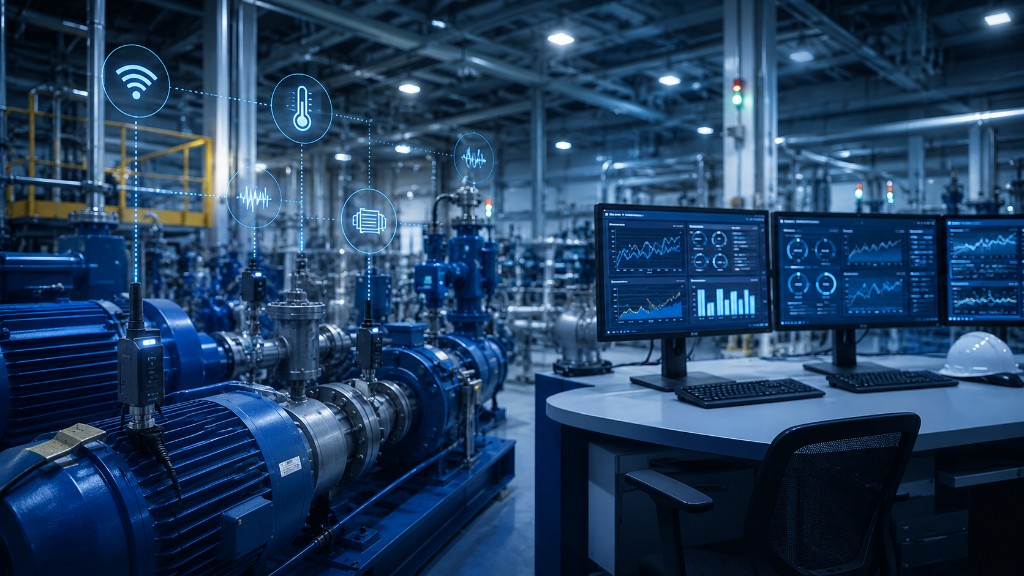
With sensors, Industrial IoT and SCADA platforms, equipment condition can be tracked continuously.
When an anomaly occurs, the system generates automatic alerts — before operations are interrupted.
- Temperatures
- Vibration
- Operating hours
- Energy consumption
- Operational states
Benefits
Moving from reactive to predictive maintenance delivers measurable operational gains for production, maintenance and operations teams.
- Less downtime — early identification of problems
- Higher availability — equipment operational for longer
- Cost reduction — fewer emergency interventions
- Better planning — maintenance becomes scheduled
- More data — decisions backed by real information
The Role of ScadaIoT
ScadaIoT implements industrial monitoring, Industrial IoT and SCADA solutions that track equipment in real time and anticipate failures before they affect operations.
The goal is simple:
Turn data into decisions.
Conclusion
Waiting for a breakdown is no longer a sustainable strategy.
With continuous monitoring, smart alarm management and predictive maintenance, industries anticipate failures instead of paying for them in downtime, delays and emergency costs.