Key figures
6+
Lost production, overtime, raw material waste, delivery delays, contractual penalties and customer dissatisfaction.
Manual
Excel sheets, scattered information and reports produced days after the event prevent fast decisions.
Real time
Continuous visibility, instant alarms, trends and availability KPIs shared across the organisation.
Before
Continuous monitoring detects failures earlier, speeds up diagnosis and reduces downtime.
When a production line stops, the impact goes far beyond lost production.
In many organisations, the true cost of downtime is never calculated.
The result?
Decisions made without data and investments delayed in solutions that could deliver immediate return.
The Invisible Cost of Downtime
Industrial downtime can trigger multiple financial and operational impacts that, in isolation, seem manageable — but combined, they destroy margin.
When these factors are added up, the financial impact can be far greater than expected.
- Lost production
- Overtime hours
- Raw material waste
- Delivery delays
- Contractual penalties
- Customer dissatisfaction
Why It's Hard to Measure
Most factories still rely on manual records, Excel sheets, scattered information and reports produced days after the event.
Without real-time monitoring, it becomes impossible to understand when the failure occurred, what caused it, how long it lasted and what the financial impact was.
How SCADA and Industrial IoT Solve the Problem
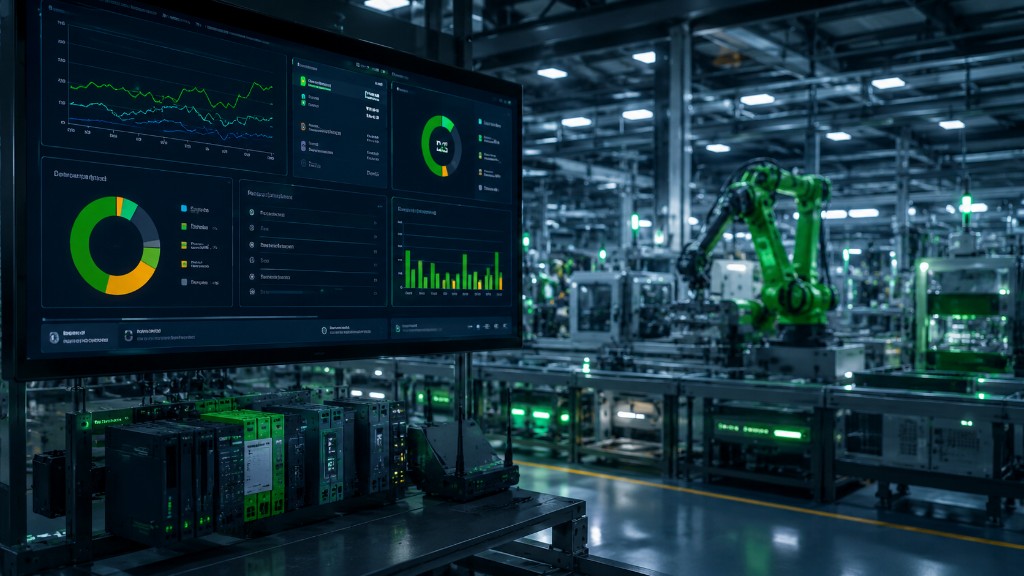
With an industrial monitoring platform, operational visibility is centralised and scattered events become actionable information.
Data becomes available to the entire organisation — production, maintenance, quality and management.
- View equipment status in real time
- Automatically log events
- Generate instant alarms
- Analyse trends
- Create availability KPIs
From Reactive to Smart Maintenance
When continuous monitoring exists, operations no longer depend solely on reactions after failure.
- Failures are detected earlier
- Diagnosis is faster
- Teams act before downtime occurs
- Unavailability times decrease
The Role of ScadaIoT
ScadaIoT implements SCADA, Industrial IoT and Remote Monitoring solutions that track equipment, processes and infrastructures in real time.
The goal is not just to collect data.
It is to turn data into decisions.
Conclusion
You cannot improve what you do not measure.
Companies that monitor their processes know their costs.
Companies that don't monitor keep reacting to problems.
The difference is visibility.