
Key figures
40%
In many technical buildings, chillers can represent up to 40% of total energy consumption.
24/7
They may run 24 hours a day, 365 days a year — small efficiency losses cost thousands of euros.
5
Consumption, temperatures, pressures, alarms and trends — continuous monitoring via CTM, SCADA and energy management.
Less
Identify waste, improve efficiency and extend equipment life with real data.
When discussing energy efficiency, many organizations focus on lighting, office equipment or solar panels.
But there is often a hidden major consumer: the HVAC system.
In offices, hotels, hospitals, shopping centers and data centers, chillers can represent a significant share of total energy consumption — up to around 40%.
Why Do They Consume So Much?
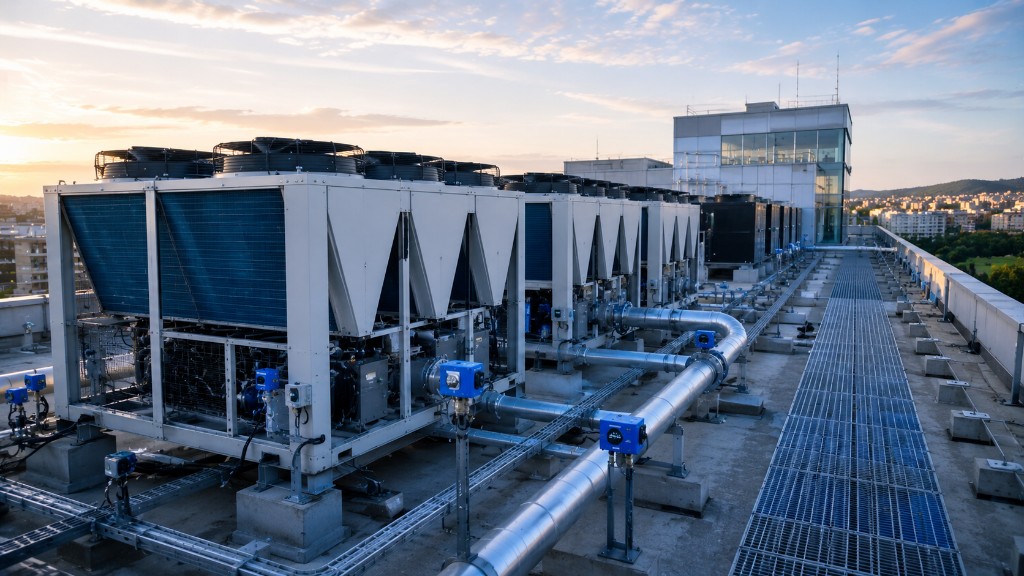
Chillers produce chilled water used in air conditioning systems.
Depending on facility size, they may run 24 hours a day, 365 days a year, continuously.
Small efficiency losses can translate into thousands of extra euros on the annual energy bill.
The Problem
In most facilities there is not enough information to answer simple questions about chiller energy performance.
Without data, there is no control.
- What is the chiller's real consumption?
- Is it operating at expected efficiency?
- Is there performance degradation?
- Is there energy waste?
What Should Be Monitored?
Continuous monitoring turns the chiller from an energy black box into a managed asset with clear indicators.
- Energy consumption — identify real operating costs
- Temperatures — chilled water and condensation
- Pressures — refrigeration circuit monitoring
- Alarms — early anomaly detection
- Trends — identification of efficiency losses over time
Savings Opportunity
With monitoring systems, CTM, SCADA and energy management you can identify waste, improve operational efficiency and reduce consumption.
ScadaIoT helps organizations transform operational data into useful information to increase energy efficiency and improve decision-making.
- Identify waste
- Improve operational efficiency
- Reduce energy consumption
- Lower operational costs
- Extend equipment life
Conclusion
Ignoring the weight of chillers on the energy bill means ignoring one of the biggest savings opportunities in a building.
Those who monitor consumption, temperatures, pressures and trends decide based on data — and reduce costs before inefficiency becomes chronic.